Wednesday, September 12, 2018
Government Emergency Telecommunications Service (GETS) and Wireless Priority Service (WPS)
The Department of Homeland Security (DHS) Office of Emergency Communications (OEC) offers a suite of Priority Telecommunications Services designed to support national security and public safety communications availability for government officials, emergency responders, and critical infrastructure owners and operators.
GETS is designed to provide priority landline and some cellular calling capabilities when communications networks are congested.
WPS is designed to provide priority cellular calling capabilities when communications networks are congested.
The national security and emergency preparedness (NS/EP) community spans the federal, state, local, tribal and territorial governments; public safety and emergency responders; industry partners who are responsible for maintaining the Nation’s critical infrastructure; and other authorized users. Organizations that rely on telecommunications on a daily basis to protect public health, maintain law and order, ensure public safety, and/or provide financial or utility service should enroll in these vital priority services. Typical GETS, WPS, and TSP users are responsible for the command and control functions critical to management of, and response to, national security and civil emergencies.
Download this guide to using GETS / WPS.
Additional information and documents about GETS / WPS can be found here.
If you are in the path of Hurricane Florence the GETS / WPS services may be essential to maintaining emergency communications in the aftermath of the storm. - Stay Safe!
No, The Police Can't Arrest a Whole Bunch of 7th Grade Girls to Prove A Point
The panel affirmed the district court’s summary judgment in an action brought by three middle school girls who alleged that a Sheriff’s deputy arrested them on campus without probable cause, in violation of their Fourth Amendment rights and state law.
9th Cir.: No, the police can't arrest a whole bunch of 7th grade girls without evidence of a crime to "prove a point."
9th Cir.: "The arrest of a middle schooler ... cannot be justified as a scare tactic, a lesson in maturity, or a chastisement for perceived disrespect."
9th Cir.: A group of middle school girls being "disrespectful" and "whispering among themselves" does not constitute probable cause that they have committed a crime.
Tuesday, September 11, 2018
WE WILL NEVER FORGET 9/11
Where were you on that fateful morning of September 11, 2001? Do you remember how the world seemingly stopped as the world and our country watched in disbelief and then horror as the twin World Trade Center towers were hit, then came down, the loss of life, unimaginable.
Further horrors and uncertainties were unveiled as we also saw that the Pentagon had been hit by American Airlines Flight 77, and United flight 93 had come down in Pennsylvania. Let's also remember how as Americans, we came together in our grief, comforting those who lost their loved ones, or who were hurt and injured in the attacks, and remembering those who lost their lives.
September 11, 2018 - 17 years to the day when our lives were changed forever, let us stand together in reflection, and remember, and never, ever forget.
Monday, September 10, 2018
World Suicide Prevention Awareness Day
September 10th is World Suicide Prevention Awareness Day and September as a whole is Suicide Prevention Month.
Numbers out from the CDC show that suicide has risen 25 percent across the U.S. in the last 20 years.
If you need help, or if you're worried about a friend or loved one, call the National Suicide Prevention Hotline at 1-800-273-8255.
VA Releases National Suicide Data Report (June 18, 2018)
This report yields several important insights:
Suicide rates increased for both Veterans and non-Veterans, underscoring the fact that suicide is a national public health concern that affects people everywhere.
The average number of Veterans who died by suicide each day remained unchanged at 20.
The suicide rate increased faster among Veterans who had not recently used Veterans Health Administration health care than among those who had.
#WorldSuicidePreventionDay
#ВсемирныйДеньПредотвращенияСамоубийств
#Weltsuizidpräventionstag
#WereldSuïcidePreventiedag
#ВсемирныйДеньПредотвращенияСамоубийств
#Weltsuizidpräventionstag
#WereldSuïcidePreventiedag
Social Security Numbers Exposed on US Government FOIA Web-site
The US government exposed dozens of people’s personal details, including social security numbers, due to an online mishap on a public transparency portal, it emerged this week.
FOIA.gov, a site that centrally administers freedom of information act requests, had been serving up the information for weeks, CNN reported on Monday.
Those requesting information may enter sensitive personal data and are even encouraged to do so by government agencies to help service their requests – information such as status on an immigration application or information about criminal cases.
The problem stemmed from a software bug in the site’s search facility. This allows people to search existing FOIA requests and find out who has requested information about what. These records include personal details that the site normally withholds until the originating agency gives permission to reveal it.
That masking stopped working. Instead, the site began displaying all of the information by default, including sensitive data, effectively rendering it publicly available.
The software glitch meant that sensitive information about individuals, including birthdates, immigrant identification numbers, addresses and contact details were available online. CNN identified at least 80 full or partial Social Security numbers during its research.
According to the news site, the masking feature had been working properly until 9 July, when the website upgraded from version 2.0 to version 3.0. This means information would have been publicly available until shortly after reporters from CNN, tipped off by a source, alerted the government.
At that point, FOIA.gov attempted to re-mask sensitive information, but some data needed to remain publicly viewable. Last Thursday, it sent a notice to the relevant originating agencies asking them to review the publicly viewable information on the site to ensure that FOIA.gov was authorized to disclose it. (CNN, September 3, 2018)
--
Database compromises are a common problem, both for government information and for businesses that maintain information about their customers. Making data accessible to those who have an authorized and legitimate need for it, while at the same time keeping that data protected from all other access is a significant problem.
Errors exists in databases, or are created when systems and software are upgraded. Criminals may find ways to exploit weaknesses in security, and insiders may compromise information through intent, negligence, or error.
Before providing any of your personal information to a government agency, or to a business, ask yourself what will be the effect if (when) this information is compromised?
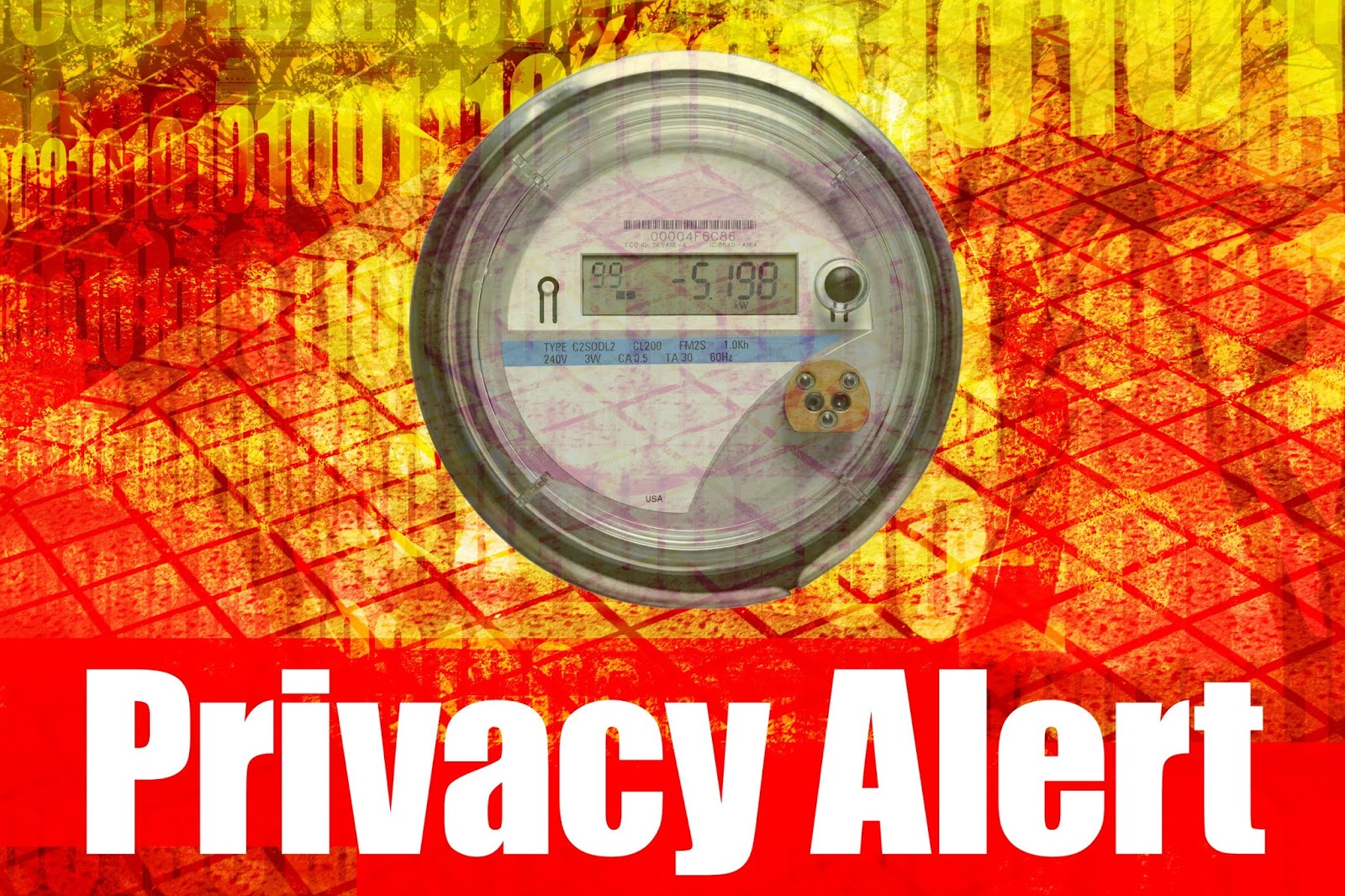
Your Smart Electricity Meter Can Easily Spy On You
Modern meters can track not only when you’re not home, but what you’re up to when you're there.
Modern electricity usage meters provide innumerable benefits to utility companies, including a variety of remote access and monitoring tools to better manage the power grid. They also dramatically reduce the cost of technician visits for on-location meter readings.
But these devices also collect an ocean of private customer data, including detailed information that can be used to infer when you wake, when you sleep, and when you’re at home or away. In the past, electricity meters delivered a lump monthly figure to utilities, but smart meters transmit data in granular detail, often in increments ranging from fifteen minutes to every few hours.
This week, the Seventh Circuit Court of Appeals ruled that the Fourth Amendment does in fact protect energy-consumption data collected by smart meters. The ruling leans heavily on the Kyllo v. United States precedent that declared the use of thermal imaging tech to monitor citizens without a warrant also violates the Fourth Amendment.
The court was quick to point out smart meter data collection often provides much deeper insight than could be obtained via the thermal imaging tech that was at issue in the Kyllo ruling. In large part because modern appliances often have distinct energy-consumption patterns or “load signatures” that not only tell the utility when you’re home, but precisely what you’re doing.
“A refrigerator, for instance, draws power differently than a television, respirator, or indoor grow light,” the ruling notes. “By comparing longitudinal energy-consumption data against a growing library of appliance load signatures, researchers can predict the appliances that are present in a home and when those appliances are used.”
“The Seventh Circuit recognized that smart meters pose serious risks to the privacy of all of our homes, and that rotely applying analog-era case law to the digital age simply doesn’t work,” Jamie Williams, staff attorney at the Electronic Frontier Foundation, told Motherboard. (Motherboard, August 24, 2018)
--
While the court's ruling that the Fourth Amendment protects smart-meter data may limit access to that data by law enforcement, it doesn't prevent it from being accessed by business organizations, stolen by hackers, or used by some out of control government employee in a basement office keeping illegal files about you hidden away on a government computer network.
Sunday, September 9, 2018
$12.5 Million Settlement for Unarmed Man Killed by Lakewood Police Sniper
The city of Lakewood, its police chief and two officers have dropped an appeal of a record $15.1 million jury verdict in the 2013 SWAT-team sniper-death of Leonard Thomas, an unarmed black man who was killed as he clutched his 4-year-old son following a four-hour standoff, and have agreed to pay Thomas’ family $12.5 million to settle the wrongful-death and civil-rights lawsuit.
The settlement in the racially charged case leaves in place the July 2017 unanimous verdict by a jury in U.S. District Court in Seattle finding Lakewood, Fife and members of the Pierce County Metro SWAT team committed 14 separate civil-rights violations that night, including illegal seizure and use of excessive force.
The verdict came after a three-week trial and four days of deliberations. The panel had singled out Lakewood Police Chief Mike Zaro — then an assistant chief — and Lakewood officers Sgt. Brian Markert and Mike Wiley for punitive damages totaling $6.5 million, finding their actions were particularly egregious and led to Thomas’ unnecessary death.
Metro Pierce County SWAT, responded to a 911 call as part of a multi-agency operation that included more than 20 heavily armed officers and an armored vehicle, which they drove onto Thomas’ front yard. Over the next four hours, Thomas repeatedly told police to go away and officers agreed he had committed a misdemeanor assault on his mother at best. Thomas never displayed a firearm — there were no guns in the house — and he never threatened police or his son, according to testimony at trial. SWAT breached the back door of the home just as Thomas had agreed with a hostage negotiator to let the boy go. The defense said that Thomas, who was on the front porch with the boy when the team used explosives to blow down his back door and then shot his dog, reached for the boy.
A SWAT Sniper, hidden across the street with a .308-caliber precision rifle, shot Thomas in the belly when he reached for the boy. Officers testify they had to pry the child out of his dying father’s arms as Thomas, who was bleeding to death, begged them not to hurt his boy.
The city of Lakewood has said it would indemnify the officers in this lawsuit. (The Olympian, September 7, 2018)
Subscribe to:
Posts (Atom)